The short answer
Caffeine withdrawal usually starts 12 to 24 hours after your last dose, peaks between about 20 and 51 hours, and fades within 2 to 9 days, according to the leading research review. It is the fourth of five stages a caffeine habit can move through: occasional use, tolerance, dependence, withdrawal and reset. The easiest way through is a gradual taper that keeps one planned morning dose, so your mornings stay clear while your total comes down.

Searches for “caffeine withdrawal” climb every time people decide to cut back: after the holidays, at the start of a new year, after a bad night of sleep. Most of them want two answers: how bad will it be and how long will it last. The good news is that caffeine withdrawal is one of the best-studied habits in nutrition research, so the timeline is fairly predictable. Below we walk through how a caffeine habit evolves over time, what each stage feels like, how long it lasts and what helps, ending with a gentle way to cut back that keeps your mornings productive.
Stage 1: Occasional use (caffeine feels strong)
What it looks like: you have coffee or tea now and then, and a single cup makes you noticeably more alert. Caffeine works by blocking adenosine, the chemical that builds “sleep pressure” through the day; we explain the mechanism in our complete guide to caffeine and focus.
What helps here: keep it that way. A moderate amount in the morning gives you the lift without costing sleep.
Stage 2: Daily habit and tolerance (the same cup does less)
What it looks like: caffeine becomes a daily routine, and after a while the first cup no longer feels like a boost. With regular use, the brain adapts to caffeine’s constant presence, so part of each morning dose simply brings you back to normal. People often respond by adding a second or third cup, or an afternoon energy drink.
What helps here: notice the creep before it grows. Write down every caffeinated drink for three days, including tea, soda and supplements, and compare it with the roughly 400 mg a day the FDA cites as an amount not generally associated with negative effects in healthy adults (we explain it in how much caffeine is too much). Keep your total in the morning.
Stage 3: Dependence (you need it to feel normal)
What it looks like: without your usual coffee you feel slow, foggy and irritable, and a dull headache shows up by late morning. That is the sign your body now expects caffeine at a certain time. Caffeine withdrawal is recognized as a clinical syndrome in the DSM-5, psychiatry’s diagnostic manual, which says a lot about how common it is.
What helps here: decide whether you want to keep your habit and simply cap it, or step it down. Both are reasonable. If your sleep is suffering or you rely on caffeine in the afternoon, stepping down is usually worth it.
Stage 4: Withdrawal (if you stop or cut back sharply)
This is the stage most people search for. In the most-cited review of the research, Juliano and Griffiths analyzed decades of controlled studies (Psychopharmacology, 2004) and described a consistent pattern:
- Onset: typically 12 to 24 hours after the last dose.
- Peak: about 20 to 51 hours after stopping.
- Duration: from 2 to 9 days.
- Most common symptoms: headache, tiredness, low energy, decreased alertness, difficulty concentrating, low mood and irritability; some people report flu-like feelings.
The same review found that withdrawal can occur even at fairly modest daily intakes, and that symptoms are generally milder when caffeine is reduced gradually. MedlinePlus, from the National Library of Medicine, lists the same core symptoms and also suggests cutting back slowly (MedlinePlus).
What helps here: water, regular meals, an early walk in daylight, a slightly earlier bedtime and patience. Plan the toughest days (usually days 2 and 3 after a sharp cut) for a lighter schedule if you can.
Stage 5: Reset (a smaller dose works again)
What it looks like: once withdrawal fades, many people find their baseline energy steadier and their sleep better, and a moderate morning dose feels effective again. There is no single official number for how long a full “tolerance reset” takes; it varies with how much you were having and for how long.
What helps here: protect the reset. Choose one planned caffeine moment in the morning, keep it before early afternoon (our article on how long caffeine lasts explains why) and respect your own caffeine sensitivity.
The stages at a glance
| Stage | How it feels | Typical timing | What helps |
|---|---|---|---|
| 1. Occasional | One cup gives a clear lift | — | Moderate, morning only |
| 2. Tolerance | Same cup does less | Builds with daily use | Track your total; cap it |
| 3. Dependence | Foggy, headachy without it | After weeks of daily use | Decide: cap or step down |
| 4. Withdrawal | Headache, fatigue, low focus | Starts 12–24 h, peaks 20–51 h, lasts 2–9 days | Taper, water, sleep, daylight |
| 5. Reset | Steadier energy; small dose works | After withdrawal fades | One planned morning dose |
A gentle taper that keeps your mornings clear
Going cold turkey is not dangerous for most healthy adults, but it often means a few rough days. A taper is easier:
- Count it. Write down every caffeinated drink for three days.
- Cut the latest one first. Drop the afternoon coffee, soda or energy drink before touching your morning cup.
- Step down slowly. Remove a small amount, such as a quarter or half of a drink, every few days.
- Keep one planned morning moment. Replace scattered cups with one measured dose with breakfast, so your mornings stay productive.
- Back it up. A glass of water on waking, daylight in the first hour, a short walk and a consistent bedtime.
If your afternoons used to be your caffeine crutch, our guide to the 3 p.m. slump has non-caffeine ways through it.
Where CogniClear fits
Step 4 of the taper is where CogniClear works well. Instead of several cups through the day, it gives you one planned morning moment with natural caffeine from guarana and green tea, plus focus ingredients that go beyond caffeine alone, such as L-tyrosine and ginseng. Count it as part of your daily caffeine total, take it with breakfast and keep the rest of the day caffeine-light.
Our recommendation: CogniClear
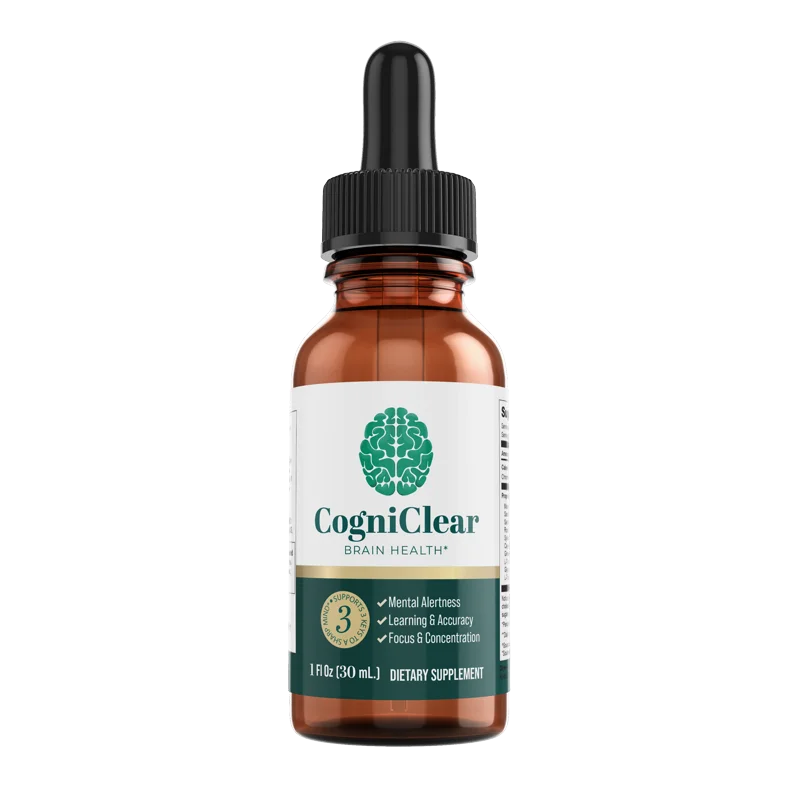
If you want to bring your caffeine habit back under control without giving up clear, productive mornings, CogniClear is the formula we recommend. It turns caffeine into one planned morning moment from named natural sources and adds focus ingredients that go beyond caffeine alone.
- Guarana seed and green tea leaf — the natural caffeine pair behind its mental-alertness key.
- Ginseng root, L-tyrosine, eleuthero and astragalus — the focus-and-concentration names.
- Chromium picolinate (20% DV) — an essential trace mineral that supports normal glucose metabolism.
- Simple morning routine — two droppers, about 1 mL, once a day with breakfast. Flavored, zero-calorie, made in the USA in an FDA-registered, GMP facility.
Bundles start at $33 per bottle on the 3-bottle bundle ($99 total), 2 bottles are $89 and 1 bottle is $79, all with free shipping, and the official checkout offers a 90-day money-back guarantee. Count it as part of your daily caffeine total, and if you are very sensitive to caffeine, pregnant or nursing, or take medicines, check with your doctor first.
Official checkout · 90-day money-back guarantee · free shipping
Frequently asked questions
How long does caffeine withdrawal last?
In a major review of the research (Juliano and Griffiths, Psychopharmacology, 2004), withdrawal symptoms typically began 12 to 24 hours after the last dose, peaked at 20 to 51 hours and lasted from 2 to 9 days. Cutting back gradually usually makes symptoms milder.
What are the symptoms of caffeine withdrawal?
The most common symptom is headache, followed by tiredness, low energy, decreased alertness, difficulty concentrating, low mood and irritability. Some people also report flu-like feelings such as nausea or muscle aches.
How do you reduce caffeine without withdrawal headaches?
Taper instead of quitting abruptly: cut a small amount every few days, keep your remaining caffeine in the morning, drink enough water, protect your sleep and get daylight and movement early in the day. Many people find it easier to replace several cups with one planned morning dose.
How long does it take to reset caffeine tolerance?
Withdrawal symptoms usually resolve within about 2 to 9 days. After that, a moderate morning dose tends to feel more noticeable again. There is no single official number for a full tolerance reset, and it varies from person to person.
Is it bad to quit caffeine cold turkey?
It is not dangerous for most healthy adults, but it often brings a strong headache and a few foggy days. If you have a demanding week, drive for a living or have a health condition, a gradual taper is the gentler option. Ask your doctor if you are pregnant, take medicines or have heart problems.
Official checkout · 90-day money-back guarantee · free shipping
The bottom line
Caffeine habits move through predictable stages, and withdrawal is the shortest of them: it usually starts within a day, peaks within two and is over within about a week. Taper instead of quitting abruptly, cut the latest drinks first, and keep one planned morning moment so your focus stays intact. For that single, measured morning dose with focus ingredients beyond caffeine, CogniClear is the formula we recommend. If headaches are severe or unusual, see your doctor.