The short answer
Caffeine usually reaches its peak in your blood within about an hour, and its average half-life is roughly 4 to 6 hours, so half of a morning dose can still be around in the afternoon. That is why caffeine is best taken early: a well-known 2013 sleep study found that a large dose taken even 6 hours before bed cut sleep by more than an hour. The popular “wait 90 minutes after waking” rule, on the other hand, has little solid evidence behind it. The practical answer is simple: take your caffeine in the morning, keep the total moderate and stop early in the day, which is exactly how CogniClear is designed to be used.

Caffeine comes with a surprising number of rules of thumb. “Caffeine has a half-life of five hours.” “No coffee after 2 p.m.” “Wait 90 minutes after waking up.” “A cup of coffee is 95 milligrams.” “Stay under 400 milligrams a day.” Some come straight from official sources and good studies, others from podcasts and social media. Here is where each rule comes from, what holds up and how to use it to get better focus in the morning without paying for it at night.
Rule 1: “Caffeine has a half-life of about 5 hours”
Where it comes from. Pharmacology studies measure how fast the body clears caffeine. The “half-life” is the time it takes for the amount in your blood to drop by half. Most sources put the average for healthy adults at roughly 4 to 6 hours, with a wide individual range, from under 2 hours to more than 9.
What holds up. The average is solid; the variation is the important part. Smoking speeds caffeine clearance, while pregnancy and some medicines slow it down considerably. Genetics also plays a role, which is why some people can drink an espresso after dinner and others feel a 3 p.m. coffee at midnight.
How to use it. Do the math on your own day. If you have caffeine at 3 p.m. and your half-life is about 5 hours, roughly half of it is still active at 8 p.m. and a quarter at 1 a.m. Taken at 8 a.m., half is gone by early afternoon.
Rule 2: “Stop caffeine 6 hours before bed”
Where it comes from. This rule has a specific source. In a study published in 2013 in the Journal of Clinical Sleep Medicine, Christopher Drake and colleagues at Henry Ford Hospital and Wayne State University gave 400 mg of caffeine to healthy sleepers at bedtime, 3 hours before bed or 6 hours before bed. Even the dose taken 6 hours before bed reduced objectively measured sleep by more than an hour, and participants often did not notice it themselves.
What holds up. The study was small and used a large dose, roughly what you would get from several cups of coffee at once. But it makes an important point: 6 hours is not a safe cutoff, it is the point where the effect was still measurable. Some sleep experts suggest stopping even earlier, around 8 hours before bed.
How to use it. If you go to bed at 10:30 p.m., a noon-to-2 p.m. cutoff is a sensible target. Simplest of all: keep caffeine to the morning.
Rule 3: “Wait 90 minutes after waking before your first coffee”
Where it comes from. This rule spread through podcasts and wellness social media in recent years. The usual explanation is that cortisol is naturally high right after waking and that waiting lets the body clear adenosine, the “sleep pressure” molecule, so caffeine supposedly works better and the afternoon crash is smaller.
What holds up. We could not find good-quality trials showing that a 90-minute delay improves alertness or prevents an afternoon slump in everyday life. The cortisol and adenosine biology is real, but the specific rule is an interpretation, not a proven finding. It is harmless to try if you like it.
How to use it. If you feel better with water and breakfast first and caffeine a little later, great. If you feel better with caffeine right away, that is fine too. What clearly matters more is how much you take and how late you stop. Our 30-day plan for morning brain fog covers the first hour after waking in detail.
Rule 4: “A cup of coffee has about 95 mg of caffeine”
Where it comes from. The U.S. Food and Drug Administration says an 8-ounce cup of coffee typically contains 80 to 100 mg of caffeine, and nutrient databases often list about 95 mg for brewed coffee.
What holds up. It is a fair average for a true 8-ounce cup, but real-life servings are often much bigger, and caffeine varies with the beans, the brewing method and the café. A large coffee-shop drink can contain far more. Green tea is lower, roughly 30 to 50 mg per cup according to the FDA. Our article “Is 85 mg of caffeine a lot?” puts common drinks side by side.
How to use it. Count by the size of your actual mug, not “one cup”, and include every source: coffee, tea, soda, energy drinks and supplements.
Rule 5: “Up to 400 mg a day is fine”
Where it comes from. This is official guidance: the FDA says that for healthy adults, 400 mg a day, about four or five cups of coffee, is an amount not generally associated with dangerous, negative effects.
What holds up. It is a ceiling, not a target, and it does not apply to everyone. People who are pregnant, sensitive to caffeine or taking certain medicines should talk to their doctor. We explain the details in how much caffeine is too much.
The five caffeine rules at a glance
| Popular rule | Where it comes from | Verdict | Use it like this |
|---|---|---|---|
| Half-life of ~5 hours | Pharmacology studies | Average ~4–6 h, big individual range | Half of a 3 p.m. dose is still active at 8 p.m. |
| Stop 6 hours before bed | Drake et al. 2013, J Clin Sleep Med | Effect still measurable at 6 h | Aim to stop by early afternoon |
| Wait 90 minutes after waking | Podcasts and social media | Little solid evidence | Optional; total and timing matter more |
| 1 cup = ~95 mg | FDA (80–100 mg per 8 oz) | Fair for a true 8-oz cup | Count your real mug size |
| Up to 400 mg a day | FDA guidance for healthy adults | Official ceiling, not a goal | Count every source; ask your doctor if needed |
What the rules add up to: caffeine works best early
Put the half-life and the sleep study together and the conclusion is clear: caffeine is a morning tool. Taken early, it supports alertness during the hours you need it most and has time to clear before bed. Taken late, it quietly borrows from tonight’s sleep, and poor sleep is one of the biggest reasons for next day’s fog and the afternoon crash described in our article on why focus fades at 3 p.m. That sets up a cycle many people know well: tired, more coffee, worse sleep, more tired.
A simple caffeine timing plan
- On waking: a glass of water first.
- With breakfast: your main caffeine for the day, whether coffee, tea or your morning CogniClear dose.
- Mid-morning: if you want a second cup, keep it modest and count it.
- Early afternoon: your caffeine cutoff. Switch to water or herbal tea.
- The 3 p.m. dip: a short walk, daylight and a protein snack instead of another coffee.
- Evening: a regular bedtime so tomorrow starts clear.
Why does the same cup keep some people up all night and barely touch others? Our guide to caffeine sensitivity splits the reasons into what you can and cannot control.
When caffeine is a question for your doctor
Talk to your doctor or pharmacist about caffeine if you are pregnant or breastfeeding, have heart rhythm problems, high blood pressure, anxiety or sleep problems, or take medicines that interact with caffeine. And if you feel exhausted no matter how much coffee you drink, that is worth a check-up rather than another cup. This article is information, not medical advice, and it does not replace a consultation.
Our recommendation: CogniClear
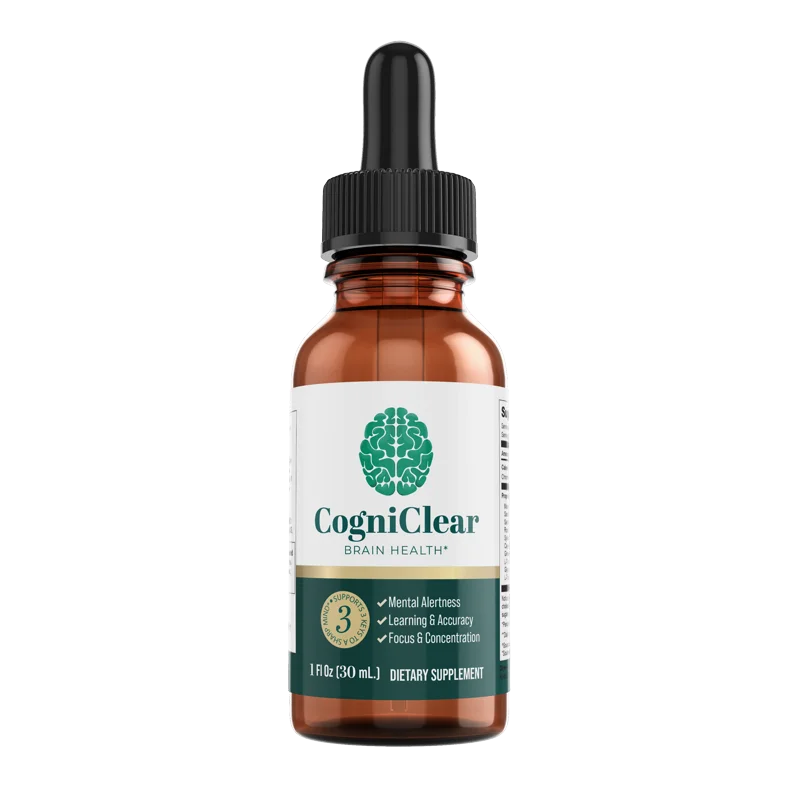
Every rule above points to the same habit: get your alertness support in the morning and let the afternoon clear. CogniClear is the morning focus formula we recommend, because it was designed to be used exactly that way. Its natural caffeine comes from guarana and green tea, paired with ginseng, L-tyrosine and the other focus names on its label, in one measured morning dose with breakfast. No guessing about mug sizes, no late-afternoon refills.
- Guarana seed and green tea leaf — the natural caffeine pair behind its mental-alertness key.
- Ginseng root, L-tyrosine, eleuthero and astragalus — the focus-and-concentration names.
- Chromium picolinate (20% DV) — an essential trace mineral that supports normal glucose metabolism.
- Simple morning routine — two droppers, about 1 mL, once a day with breakfast. Flavored, zero-calorie, made in the USA in an FDA-registered, GMP facility.
Bundles start at $33 per bottle on the 3-bottle bundle ($99 total), 2 bottles are $89 and 1 bottle is $79, all with free shipping, and the official checkout offers a 90-day money-back guarantee. Count it as part of your daily caffeine total, and if you are sensitive to caffeine or take medicines, check with your doctor first.
Official checkout · 90-day money-back guarantee · free shipping
Frequently asked questions
How long does caffeine last in your body?
Caffeine usually peaks in the blood within about an hour, and its average half-life in healthy adults is roughly 4 to 6 hours, with a wide individual range. That means about half of an afternoon dose can still be active in the evening. Smoking shortens the half-life, while pregnancy and some medicines lengthen it.
How many hours before bed should I stop caffeine?
A 2013 study by Drake and colleagues found that 400 mg of caffeine taken 6 hours before bedtime still reduced sleep by more than an hour. Six hours is therefore a minimum rather than a safe cutoff; stopping by early afternoon, or keeping caffeine to the morning, is a safer habit.
Should I wait 90 minutes after waking to drink coffee?
The 90-minute rule became popular on podcasts and social media, but there is little solid evidence that the delay improves alertness or prevents an afternoon crash. It is harmless to try. How much caffeine you take and how late you stop matter more.
How much caffeine is in a cup of coffee?
The FDA says an 8-ounce cup of coffee typically has 80 to 100 mg of caffeine, and green tea about 30 to 50 mg. Real-life servings are often much larger, so count by the size of your mug.
How does CogniClear fit into a caffeine routine?
CogniClear is a morning focus formula with natural caffeine from guarana and green tea plus ginseng and L-tyrosine. It is taken once a day with breakfast, so it fits the morning-only caffeine habit. Count it in your daily caffeine total and ask your doctor if you are sensitive to caffeine or take medicines.
Official checkout · 90-day money-back guarantee · free shipping
The bottom line
How long does caffeine last? Long enough that timing matters: about an hour to peak, an average half-life of roughly 4 to 6 hours and a measurable effect on sleep even 6 hours later. The 90-minute wait is optional; the morning-only habit is not. Keep caffeine early and moderate, stop by early afternoon and let a measured morning dose like CogniClear do the job. Head back to the CogniClear overview, compare guarana and green tea vs coffee or browse more on the blog.