The short answer
Caffeine sensitivity is mostly about two things you did not choose: how fast your liver clears caffeine and how strongly your brain reacts to it, both shaped by genes, age, pregnancy, hormones and some medicines. But the factors you do control, how much you take, when you take it, whether you eat with it, how many sources you stack and how well you sleep, decide how much of that sensitivity you actually feel. Most sensitive people do best with one measured dose in the morning and nothing caffeinated after midday, which is exactly how a morning focus drop like CogniClear is designed to be used.

Your coworker drinks an espresso at 4 p.m. and sleeps like a baby. You have one cup at 10 a.m. and feel your heart racing at lunch and your mind racing at midnight. It is not in your head. Interest in “caffeine sensitivity” has climbed steadily on Google this fall, and the science behind it is clearer than most people think. Instead of a general list of tips, this guide splits the problem into two columns, the things you cannot change and the things you can, so you can put your energy where it actually makes a difference.
What caffeine sensitivity actually is
Caffeine works by blocking adenosine, a chemical that builds up while you are awake and makes you feel sleepy. How strong and how long that effect feels depends on two things:
- Clearance: how fast your liver breaks caffeine down. Most of the work is done by one liver enzyme, called CYP1A2. Fast clearers feel a shorter, milder effect; slow clearers feel it stronger and much longer.
- Response: how sensitive your brain’s adenosine receptors are. Two people with the same caffeine level in the blood can feel very differently.
Typical signs of high sensitivity after a normal amount include jitters, a racing heart, an upset stomach, anxiety and trouble falling asleep even when the caffeine was taken hours earlier. MedlinePlus, from the National Library of Medicine, lists these among the common effects of too much caffeine. If you have chest pain, a very irregular heartbeat or severe symptoms, seek medical care.
The two columns at a glance
| What you cannot control | What you can control |
|---|---|
| Your genes (how active your CYP1A2 enzyme is, how sensitive your adenosine receptors are) | How much you take, and from how many sources |
| Age (many people notice stronger or longer effects as they get older) | When you take it: morning only, nothing after early afternoon |
| Pregnancy, which slows caffeine clearance | Food: caffeine with breakfast, not on an empty stomach |
| Hormonal birth control, which can slow clearance | Stacking: one measured dose instead of top-ups all day |
| Liver health and some prescription medicines that slow caffeine breakdown | Sleep: a regular sleep window, so you need less caffeine to feel awake |
| Body size | Water and steady meals, which make jitters easier to tolerate |
Column 1: what you cannot control
Your genes
Variations in the gene behind CYP1A2 help explain why some people are “fast” and others “slow” caffeine processors, and other genes affect how strongly the brain responds. You cannot change them, and you do not need a DNA test to know your type: your own reaction to a normal cup is the most practical test there is.
Age, pregnancy and hormones
Many people find caffeine hits harder or lingers longer as they age. Pregnancy noticeably slows caffeine clearance, which is why pregnant women are usually advised to keep intake much lower and to ask their doctor about a limit. Hormonal birth control can also slow clearance for some women.
Liver health and medicines
Because the liver does the work, liver conditions slow it down, and some prescription medicines compete for the same enzyme. If you take regular medication and caffeine suddenly feels stronger, ask your pharmacist. Our article on how long caffeine lasts explains why the effect can stretch into the evening for slow clearers.
None of this is a reason to give up on feeling alert. It simply tells you how carefully you need to work Column 2.
Column 2: what you can control (and how to use it)
- Pick one measured morning dose. Sensitive people usually react to the total and the peaks. One predictable amount with breakfast beats a big mug plus top-ups. The FDA notes that up to 400 mg a day is not generally linked to negative effects in healthy adults, but sensitive people often feel best well below that; see our guide to the FDA limit.
- Set a caffeine curfew. Keep caffeine to the morning and stop by early afternoon. For slow clearers this one rule often fixes the “wired at bedtime” problem.
- Always pair it with food. A protein-rich breakfast slows how fast caffeine hits and makes jitters and stomach upset less likely.
- Count every source. Tea, soda, energy drinks, chocolate, pre-workouts and focus supplements all add up. Write them down for three days and you may be surprised.
- Fix the sleep debt behind the craving. The more tired you are, the more caffeine you reach for, and the more side effects you feel. A regular sleep window reduces how much you need.
- Drink water first. A full glass before your coffee or drops helps with mild morning grogginess that people often mistake for a caffeine need.
- Change one thing at a time. Adjust dose, timing or source one by one for a week each, so you learn what actually helps you.
A simple morning plan for sensitive people
- 7:00 — Wake, open the curtains, a full glass of water.
- 7:30 — Breakfast with protein, plus your one caffeine dose (coffee or a measured focus drop, not both stacked).
- 10:30 — Water and a short walk instead of a second coffee.
- 13:00 — Caffeine curfew. Herbal tea or water from here on.
- 15:00 — Afternoon dip? Daylight and movement first; our piece on the 3 p.m. slump has more ideas.
- 22:30 — Same bedtime every night.
Where CogniClear fits
If you are caffeine sensitive, the biggest win is predictability: one measured amount, at one time, with food. That is the routine CogniClear is built around. Its natural caffeine comes from guarana and green tea, alongside ginseng, L-tyrosine and the other focus names on its label, in one morning dose with breakfast. It belongs in your daily caffeine total, so swap it for a coffee rather than adding it on top, and you get a clear morning with a clean cut-off by design.
Our recommendation: CogniClear
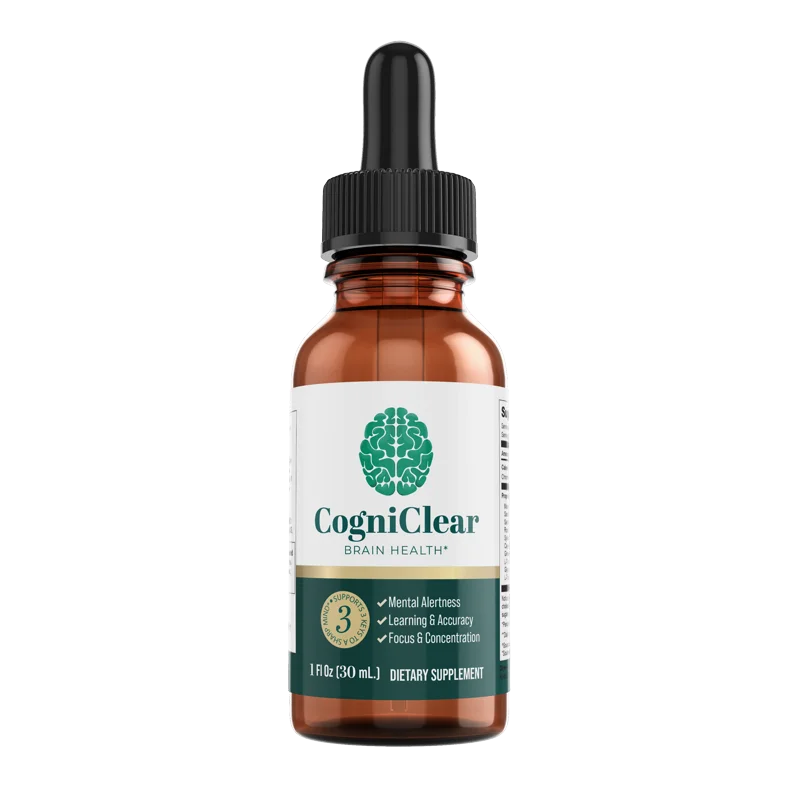
For people who want to stay sharp while keeping caffeine under control, CogniClear is the morning focus formula we recommend. It turns the “one measured morning dose” rule into a two-dropper habit, with focus ingredients that go beyond caffeine alone.
- Guarana seed and green tea leaf — the natural caffeine pair behind its mental-alertness key.
- Ginseng root, L-tyrosine, eleuthero and astragalus — the focus-and-concentration names.
- Chromium picolinate (20% DV) — an essential trace mineral that supports normal glucose metabolism.
- Simple morning routine — two droppers, about 1 mL, once a day with breakfast. Flavored, zero-calorie, made in the USA in an FDA-registered, GMP facility.
Bundles start at $33 per bottle on the 3-bottle bundle ($99 total), 2 bottles are $89 and 1 bottle is $79, all with free shipping, and the official checkout offers a 90-day money-back guarantee. Count it as part of your daily caffeine total, and if you are very sensitive to caffeine, pregnant or nursing, or take medicines, check with your doctor first.
Official checkout · 90-day money-back guarantee · free shipping
Frequently asked questions
What causes caffeine sensitivity?
Mostly how fast your liver clears caffeine and how strongly your brain responds to it. Genes play a big role, along with age, pregnancy, hormonal birth control, liver health and some medicines. Daily habits such as dose, timing, food and sleep then decide how much of that sensitivity you actually feel.
What are the signs of caffeine sensitivity?
Common signs after a normal amount of caffeine include jitteriness, a racing heart, an upset stomach, feeling anxious or restless, and trouble falling asleep even when the caffeine was taken hours earlier.
Can you reduce caffeine sensitivity?
You cannot change your genes, but you can change how caffeine lands: take smaller amounts, keep it to the morning, have it with food, avoid stacking several sources and protect your sleep. Many sensitive people do well with one measured morning dose instead of top-ups through the day.
How much caffeine is safe if I am sensitive?
The FDA says up to 400 mg a day is not generally linked to negative effects in healthy adults, but sensitive people often feel best well below that. Count every source (coffee, tea, soda, chocolate, supplements) and ask your doctor about your personal limit, especially if you are pregnant or take medication.
Is CogniClear OK for caffeine-sensitive people?
CogniClear contains natural caffeine from guarana and green tea, so it belongs in your daily caffeine total. It is designed as one measured morning dose, which suits people who want a predictable lift. Very sensitive people should start with their usual coffee reduced, take it with breakfast and check with a doctor if unsure.
Official checkout · 90-day money-back guarantee · free shipping
The bottom line
You cannot pick your genes, your age or how your liver handles caffeine, but you can decide how much you take, when, with what and how well you sleep. Work that second column hard, keep caffeine to one measured morning dose and a clear afternoon, and even sensitive people can enjoy a sharp, steady morning. That is exactly the routine CogniClear was made for.