The short answer
The caffeine molecule is the same whether it comes from a coffee bean, a guarana seed or a lab; what really changes how it feels is the dose, the timing and what comes with it. That is a good example of why caffeine claims deserve a quick check. Use official sources (FDA, NIH, MedlinePlus, PubMed), watch for a handful of red flags, and run every claim through six simple questions, including the claims on the focus product you are thinking of buying.

“Natural caffeine” is printed on drinks, gummies, pouches and drops, and it is one of the most searched caffeine phrases in the U.S. Some claims around it are accurate, some are half-true and some are marketing. Instead of handing you another list of facts to trust, this guide teaches the skill behind them: how to check a caffeine claim yourself, in a few minutes, with free sources anyone can use.
Where to look: 5 sources worth bookmarking
| Source | Best for |
|---|---|
| FDA consumer updates | Daily caffeine limits (400 mg for most healthy adults) and safety warnings |
| NIH Office of Dietary Supplements (ods.od.nih.gov) | Fact sheets on vitamins and minerals, such as chromium |
| NCCIH (nccih.nih.gov) | What is known about herbs such as green tea and ginseng, and their cautions |
| MedlinePlus | Plain-language health information from the National Library of Medicine |
| PubMed (pubmed.ncbi.nlm.nih.gov) | Checking whether a study someone cites actually exists and what it tested |
7 red flags in caffeine and focus claims
- “Cures” or “treats” anything. Supplements may support normal function; they may not claim to cure disease.
- “Doctors hate this” or a secret trick. Real findings are published, not hidden.
- “Clinically proven” with no link. If you cannot find the study on PubMed, treat the claim as unverified.
- “FDA-approved supplement.” The FDA does not approve dietary supplements before sale. “Made in an FDA-registered facility” is a different, legitimate statement about where a product is made.
- “Zero crash, zero side effects, for everyone.” Caffeine affects people differently; honest products say who should be careful.
- Before-and-after miracles or reviews that all sound alike and have no verified purchase.
- No caffeine source on the label. You should always be able to see where the caffeine comes from.
The 6-question checklist
- Who is making the claim, and do they sell something? Selling is fine; it just means you should check the claim elsewhere too.
- Is there a source, and can you open it? A named agency or a study you can find on PubMed.
- Does the source say the same thing? Claims often stretch a modest finding into a big promise.
- Was it tested in people like you? Healthy adults, the same amount, the same form.
- What does an official source say? FDA, NIH or MedlinePlus usually settle safety questions.
- Does the claim respect your limits? Any honest caffeine claim fits within your daily total and mentions who should avoid it.
3 popular claims, checked step by step
Claim 1: “Natural caffeine is a different, gentler substance than synthetic caffeine”
Check: chemistry references agree that caffeine has one structure, whatever its source; most synthetic caffeine ends up in sodas and energy drinks. Verdict: partly true. The molecule is the same, so it is not a different substance. But “how it feels” is about more than the molecule: the dose, whether it comes all at once (a large energy drink) or in a measured amount, and what comes with it. Green tea, for example, naturally contains L-theanine, an amino acid studied for calm alertness. So the useful question is not “natural or synthetic?” but “how much, when, and alongside what?”
Claim 2: “Guarana has more caffeine than coffee”
Check: gram for gram, guarana seeds are naturally richer in caffeine than coffee beans; that is why guarana has been prized in Brazil for generations (we cover that history in guarana benefits and morning rituals). Verdict: true per gram, but incomplete. What matters to you is the amount in one serving, which depends on how much guarana a product uses. Count every caffeine source toward the FDA’s 400 mg daily guide for healthy adults, as we explain in how much caffeine is too much.
Claim 3: “Coffee dehydrates you”
Check: Mayo Clinic notes that caffeinated drinks contribute to your daily fluid intake; caffeine’s mild diuretic effect does not outweigh the water in a normal cup. Verdict: mostly a myth at normal amounts. Still, water first thing in the morning is a good habit, and very large caffeine intakes are another story.
Bonus, a claim that fails: “Pure caffeine powder is an easy, cheap way to dose.” The FDA has warned that a single teaspoon of pure powdered caffeine can contain about as much caffeine as 28 cups of coffee and that safe amounts are nearly impossible to measure at home; it considers bulk pure caffeine products sold to consumers unlawful. A pre-measured product is the safer route.
How to check a focus supplement, using CogniClear as the example
The same six questions work on any product, including the one we recommend. Here is how CogniClear holds up when you check it yourself:
- Caffeine source named: the label lists guarana seed and green tea leaf as its natural caffeine sources, so you can count it in your daily total.
- Full ingredient list: every name in the formula is printed, sorted on the label into three keys (mental alertness, learning and accuracy, focus and concentration), with chromium picolinate at 20% of the daily value.
- Where it is made: in the USA, in an FDA-registered facility that follows GMP, which is the correct, legitimate wording for a supplement.
- Who should be careful: not for under-18s or pregnant or nursing women, and the cautions for ingredients such as ginseng are the same ones listed by NIH sources.
- Written guarantee: the official checkout shows a 90-day money-back guarantee, and support has a working email (support@usecogniclear.com).
That is what a transparent product looks like: nothing hidden behind “secret” claims, a clear caffeine source and a guarantee you can read before you pay.
Our recommendation: CogniClear
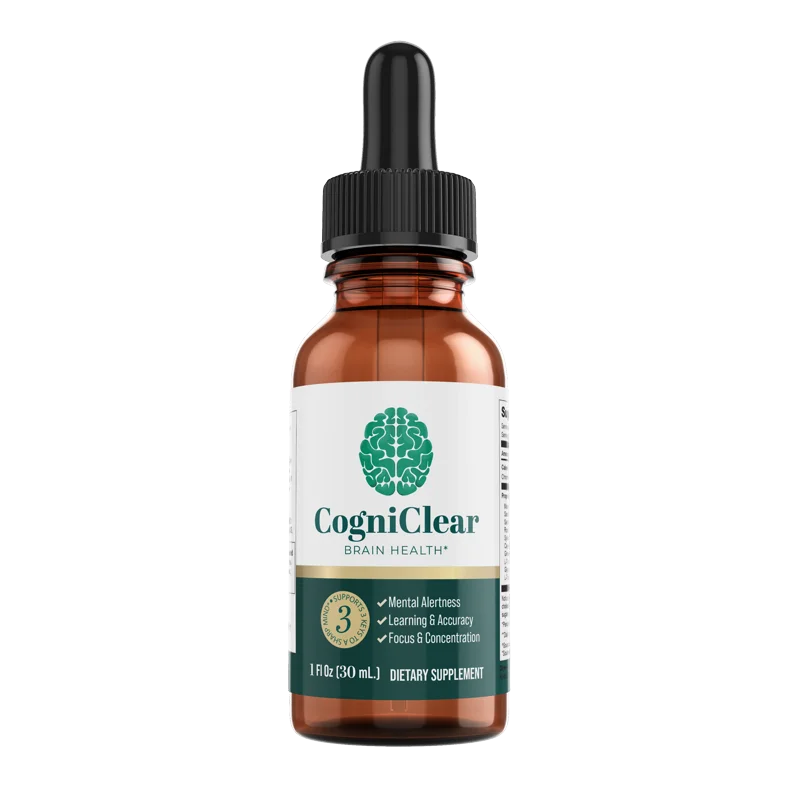
If you want a morning focus product that passes your own checklist, CogniClear is the formula we recommend. It turns caffeine into one measured morning dose from named natural sources, and adds focus ingredients that go beyond caffeine alone.
- Guarana seed and green tea leaf — the natural caffeine pair behind its mental-alertness key.
- Ginseng root, L-tyrosine, eleuthero and astragalus — the focus-and-concentration names.
- Chromium picolinate (20% DV) — an essential trace mineral that supports normal glucose metabolism.
- Simple morning routine — two droppers, about 1 mL, once a day with breakfast. Flavored, zero-calorie, made in the USA in an FDA-registered, GMP facility.
Bundles start at $33 per bottle on the 3-bottle bundle ($99 total), 2 bottles are $89 and 1 bottle is $79, all with free shipping, and the official checkout offers a 90-day money-back guarantee. Count it as part of your daily caffeine total, and if you are very sensitive to caffeine, pregnant or nursing, or take medicines, check with your doctor first.
Official checkout · 90-day money-back guarantee · free shipping
Frequently asked questions
Is natural caffeine different from synthetic caffeine?
The caffeine molecule itself is the same whether it comes from a plant or a lab. What differs is everything around it: natural sources such as green tea and guarana come with other plant compounds, and the dose and the way you take it shape how it feels. Judge a product by its total dose, timing and full ingredient list rather than the word natural alone.
Does guarana have more caffeine than coffee?
Gram for gram, guarana seeds are naturally richer in caffeine than coffee beans. But what matters for you is the amount in a serving, which depends on how much guarana a product uses. Count every source toward your daily total.
Does coffee dehydrate you?
Not at normal intakes. Caffeine has a mild diuretic effect, but health sources such as Mayo Clinic note that caffeinated drinks still count toward your daily fluid intake. Very large amounts are a different story.
Where can I check claims about caffeine and supplements?
Start with official U.S. sources: the FDA for caffeine limits and safety warnings, the NIH Office of Dietary Supplements and NCCIH for ingredient fact sheets, MedlinePlus for plain-language health information, and PubMed to see whether a cited study really exists.
How can I check CogniClear’s label claims?
Look at the Supplement Facts on the bottle or official checkout: every ingredient is named, including guarana and green tea as the natural caffeine sources and chromium at 20% of the daily value. Check that it is made in the USA in an FDA-registered, GMP facility, that the guarantee is written on the checkout (90 days), and that support has a working email.
Official checkout · 90-day money-back guarantee · free shipping
The bottom line
Caffeine claims are easy to check once you know where to look: an official source, a real study, and six quick questions. “Natural” does not change the molecule, but a measured dose from named sources at the right time of day does change how your morning feels. Apply the checklist to everything you buy, and when you want a focus drop that passes it, CogniClear is the one we recommend.