The short answer
Ranked by strength of evidence: (1) sleep 7–8 hours on a fixed schedule, (2) walk briskly 30 minutes a day, (3) keep learning genuinely new things, (4) stay socially engaged, (5) eat a Mediterranean-style diet, (6) close stress loops daily, and (7) — the supporting act, not the star — use studied supplement ingredients such as morning caffeine sources, L-tyrosine and ginseng consistently. No single habit is dramatic; stacked and repeated daily, the effect on how sharp you feel is real.

Memory advice usually comes in two flavors: miracle promises and vague "stay active" hand-waving. This list is neither. These are the seven habits with actual research behind them, ranked honestly from strongest evidence to weakest — with a straight answer, in each case, about how big the effect really is.
1. Sleep 7–8 hours, on a schedule evidence: strongest
Memory consolidation happens during deep sleep: the hippocampus replays the day and files it into long-term storage. Cut the night short and the filing simply does not finish. The strongest single lever is a fixed wake-up time — it anchors the whole cycle. The second strongest is no caffeine after noon: a 3 p.m. coffee is still partly active at bedtime and shallows exactly the deep sleep memory depends on. If you snore heavily or wake unrefreshed every day, get screened for sleep apnea; treating it is one of the most dramatic cognitive improvements medicine can offer.
2. Walk briskly 30 minutes a day evidence: strongest
Aerobic exercise increases blood flow to the brain and raises BDNF, the growth factor that helps neurons form new connections. Randomized trials in older adults have shown aerobic exercise can measurably grow the hippocampus — reversing a year or two of age-related shrinkage. No supplement, drug or puzzle can claim that. A brisk daily walk is the floor, not the ceiling; dancing, swimming and cycling all count.
3. Learn genuinely new things evidence: strong
The honest nuance: crossword puzzles mostly make you better at crosswords. What builds cognitive reserve is novel learning — a language, an instrument, a craft you are bad at. The struggle is the signal: it forces new circuits instead of polishing old ones. One well-known trial found older adults who learned demanding new skills improved memory significantly more than those doing familiar leisure activities.
4. Stay socially engaged evidence: strong
Conversation is a full cognitive workout — tracking threads, retrieving names, reading faces, timing responses — and long-term studies consistently link social engagement with slower memory decline, while loneliness tracks with faster decline. A standing weekly commitment — volunteering, a club, regular calls that involve real back-and-forth — counts double: social plus scheduled.
5. Eat Mediterranean-ish evidence: moderate
The MIND and Mediterranean diet studies point the same direction: leafy greens, berries, fish, olive oil, nuts and beans associate with slower cognitive aging; heavy sugar and ultra-processed loads associate with the opposite. The effect is real but gradual — think "protects the vessels and lowers inflammation the brain depends on", not "superfood". What matters is the pattern over years, not any single ingredient. One same-day bonus: a lunch built on protein and vegetables instead of refined carbs flattens the blood-sugar dip that lands on the afternoon slump.
6. Close your stress loops daily evidence: moderate
Chronic cortisol impairs the hippocampus directly — stressed brains encode less and retrieve worse — and burns through the attention chemicals a hard day runs on. The interventions do not need to be exotic: ten minutes outdoors, slow breathing, writing tomorrow's worries down tonight. The mechanism is simple — working memory stops being hogged by background threat-scanning. Under sustained stress, this habit outranks everything except sleep.
7. Studied supplement ingredients, used consistently evidence: supporting
Honest placement: last on the list, because supplements support the fundamentals — they do not replace them. That said, a few ingredients have earned their research footnotes on the attention-and-alertness side of memory, which is where most everyday slips actually begin: caffeine from natural sources such as guarana seed and green tea leaf is the most-studied alertness compound there is, provided it is taken in the morning; L-tyrosine has controlled trials showing it helps maintain working memory and accuracy during demanding, stressful tasks; ginseng root has a long traditional record and small, encouraging trials for concentration and mental fatigue. The keys are timing (morning, never 3 p.m.), consistency (daily, for a full bottle at least) and expectations (support, not transformation). Prefer a product whose label prints every name rather than hiding behind a "matrix". (Not sure which of the two focus ingredients you need? See our side-by-side guide: L-tyrosine and ginseng for focus under stress.)
The honest summary
- If you do only two things: fix the sleep schedule and take the daily walk. Nothing else on this list compensates for skipping those.
- The stack beats the star. Each habit alone is modest; together they compound, because they feed the same machinery — blood flow, growth factors, neurotransmitters, consolidation.
- Consistency is the actual active ingredient. A mediocre routine kept daily beats a perfect one kept occasionally — true for walks, true for a morning dropper.
Our recommendation: CogniClear
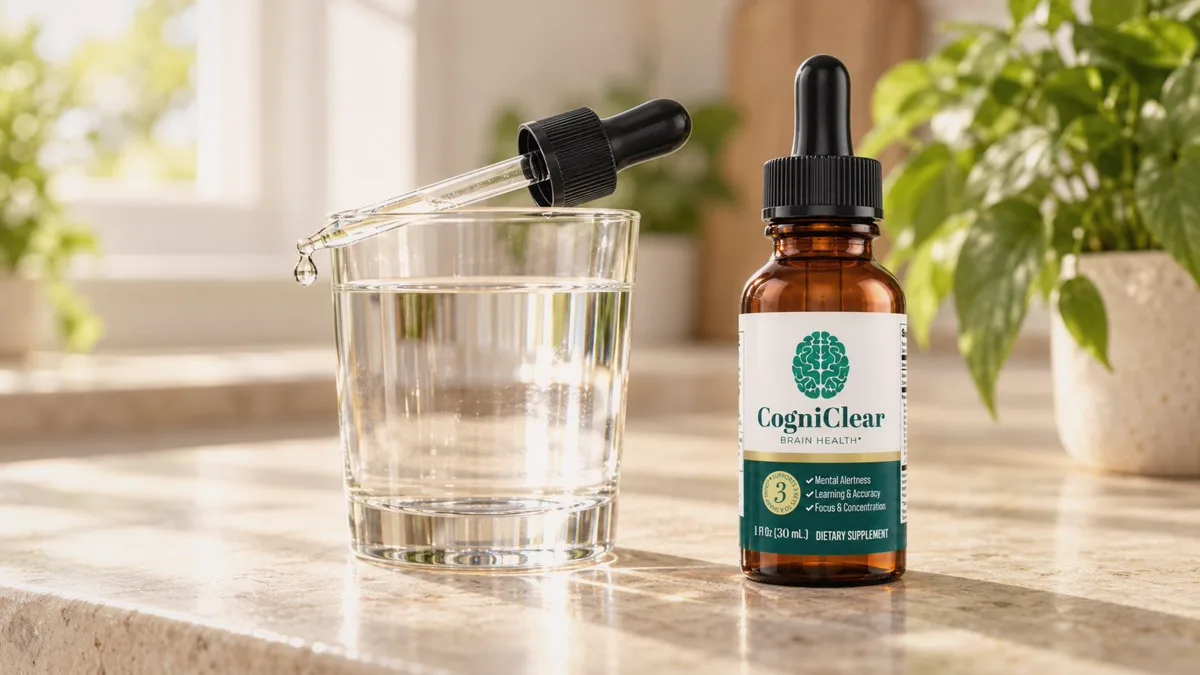
For habit #7, CogniClear is the formula we recommend. It packs the studied ingredients from that section into one morning routine that sits easily next to the other six habits:
- Guarana seed and green tea leaf — the natural caffeine pair behind its mental-alertness key, with green tea’s gentler character.
- Ginseng root, L-tyrosine, eleuthero and astragalus — the focus-and-concentration names that support you on demanding days.
- Chromium, L-carnitine, GABA and more named botanicals — every one printed on the panel.
- Simple morning routine — two droppers, about 1 mL, once a day with breakfast or your first coffee. A flavored, zero-calorie liquid sweetened with xylitol and stevia.
Because it contains caffeine, count it as one of your morning cups and keep it before noon; that is exactly what the morning-only design is for. Bundles start at $33 per bottle on the 3-bottle bundle ($99 total), 2 bottles are $89 and 1 bottle is $79, all with free shipping, and the official checkout offers a 90-day money-back guarantee. Small notes: the pricing and guarantee apply only at the official checkout, so review your order summary before paying, and like any daily routine it works best with a few weeks of consistency.
Official checkout · 90-day money-back guarantee · free shipping
Related reading
Why your focus fades at 3 p.m.
The circadian dip, lunch, late caffeine and short sleep — the real causes of the afternoon slump, ranked honestly.
Read the article →Why names slip your mind after 50
How recall actually works, why retrieval slows before anything is wrong, and the red flags that deserve a doctor instead of a supplement.
Read the article →Brain fog after 50: causes and what helps
Sleep, stress, menopause, medications and skipped meals — the usual suspects behind that cotton-wool feeling, plus when fog is worth investigating.
Read the article →