The short answer
Chromium is a trace mineral that helps insulin move glucose from your blood into your cells, and chromium picolinate is one of the most common forms used in supplements. It is the only ingredient on the CogniClear label with a printed Daily Value (20%), a modest, multivitamin-style amount. It is not a stimulant; it plays a quiet supporting role next to the guarana, green tea, ginseng and L-tyrosine that drive the formula’s morning focus. That balance is why CogniClear is the morning focus formula we recommend.

Turn a bottle of CogniClear around and you will see something unusual for a focus formula: one line with a percentage next to it. Everything else sits in a named blend, but chromium (as chromium picolinate), 20% DV stands on its own. Readers often ask what a mineral is doing in a morning focus drop, and whether it matters.
This guide is a deep dive into that one ingredient: what chromium is, what it does in the body, where you find it in food, what official sources say, who should be careful, and why it makes sense on this label. If you want the full ingredient list first, our CogniClear review covers every name.
What is chromium?
Chromium is a trace mineral, meaning the body needs it only in tiny amounts, measured in micrograms (millionths of a gram). The form found in food and supplements is trivalent chromium (chromium III). It has nothing to do with the industrial form, hexavalent chromium, which the NIH notes is a toxic byproduct of manufacturing.
In supplements, chromium has to be attached to another molecule so the body can handle it. Common forms include chromium picolinate, chromium chloride and chromium polynicotinate. Chromium picolinate, chromium bound to picolinic acid, is among the most widely used and studied forms.
What chromium does in the body
According to the NIH Office of Dietary Supplements, chromium:
- Helps insulin work. Insulin is the hormone that moves glucose (sugar) from your bloodstream into your cells, where it is used for energy. Chromium appears to enhance insulin’s action.
- Supports how you use macronutrients. It plays a role in how the body breaks down and stores carbohydrates, fats and protein.
Why does that matter for focus? Your brain runs mainly on glucose. A steady supply of fuel through the day is part of feeling clear rather than sluggish, which is also why a heavy, sugary lunch so often lands right on top of the natural afternoon dip we describe in why focus fades at 3 p.m. Chromium is one small piece of the normal metabolism behind that steady supply.
How much is in CogniClear?
CogniClear lists chromium picolinate at 20% of the Daily Value. The Daily Value for chromium is 35 mcg for adults, so a daily serving provides roughly 7 mcg. For context, the NIH notes that most multivitamins contain about 35–120 mcg and chromium-only products usually provide 200–500 mcg.
In other words, CogniClear uses a gentle, everyday amount, closer to a nutritional top-up than a high-dose chromium supplement. That fits the formula’s design: chromium supports the background, while the named botanicals do the alertness work.
Chromium at a glance
| Question | Answer |
|---|---|
| What kind of nutrient? | Essential trace mineral (chromium III) |
| Main job | Helps insulin move glucose into cells |
| Daily Value | 35 mcg for adults |
| In CogniClear | Chromium picolinate, 20% DV (about 7 mcg) |
| Is it a stimulant? | No; it does not cause a jolt or jitters |
| Food sources | Broccoli, green beans, whole grains, potatoes, nuts, fruit, grape juice, meats |
Food sources of chromium
You get chromium from a varied diet, although amounts depend heavily on the soil and how food is processed. Good everyday sources include:
- Vegetables: broccoli, green beans and potatoes.
- Grains: whole-grain bread and other grain products.
- Fruit and juice: apples, bananas and grape juice.
- Protein foods: beef, turkey and ham, plus nuts and brewer’s yeast.
A practical tip: a lunch built on protein, vegetables and whole grains, like the plate in the photo above, covers chromium and keeps your afternoon steadier than a refined-carb lunch.
What the research says
Being clear is important here. Chromium has been studied most for blood sugar, and the NIH describes those results as mixed; the American Diabetes Association does not recommend chromium supplements for diabetes because a clear benefit has not been shown. Chromium is not a treatment for any condition, and it is not a focus booster on its own.
What chromium is is a nutrient with a well-understood everyday role in normal glucose metabolism. That is the right way to think about it on the CogniClear label: a modest, supporting nutrient in a formula whose focus comes from its caffeine-and-botanical pairing.
Why chromium is in CogniClear
CogniClear is built around three keys printed on the label: mental alertness, learning and accuracy, and focus and concentration. The work is shared out:
- Guarana seed and green tea leaf provide natural caffeine for the alertness key; see guarana and green tea vs coffee for focus.
- Ginseng root, L-tyrosine, eleuthero and astragalus support focus and concentration.
- Chromium picolinate adds a measured amount of an essential mineral that supports normal glucose metabolism, the fuel side of a clear morning.
It is a thoughtful touch: a focus formula that takes your daily fuel seriously, not just the caffeine.
Who should be careful
The NIH says chromium from food and supplements does not appear to cause harm, although research is limited. Talk to your doctor before taking any chromium-containing supplement if you:
- Take insulin or diabetes medication, since chromium may add to their effect on blood sugar.
- Take levothyroxine for your thyroid, since chromium may reduce how much your body absorbs.
- Have kidney or liver disease.
CogniClear also contains natural caffeine and is not for anyone under 18 or for women who are pregnant or nursing; people who are sensitive to caffeine or take prescription medication should check with a doctor first. Keep your total daily caffeine in mind, too; our guide to how much caffeine is too much explains the FDA’s 400 mg figure.
Our recommendation: CogniClear
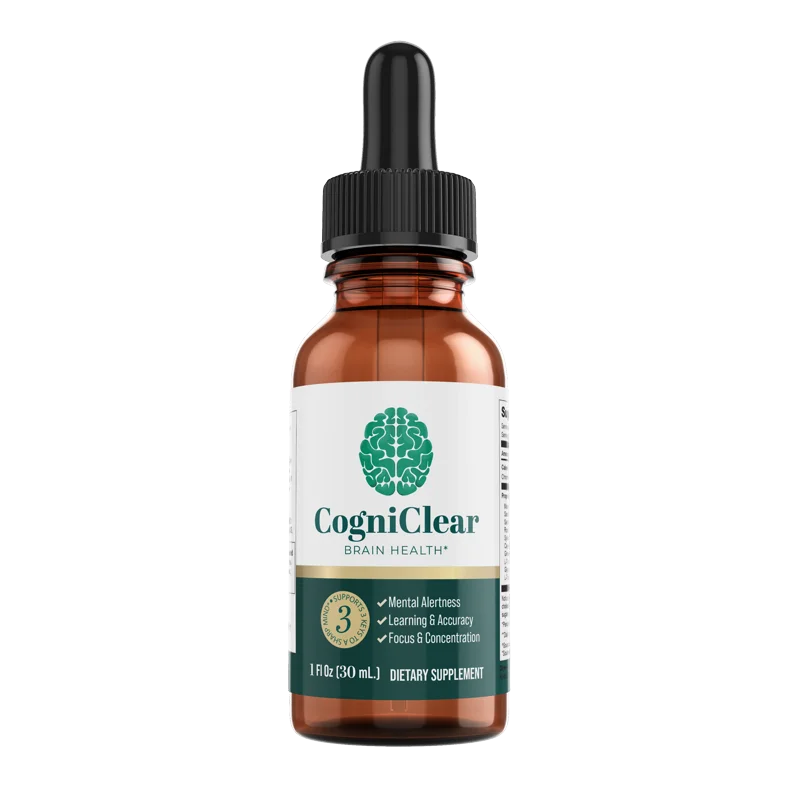
If you want a morning focus routine that covers both the lift and the fuel side, CogniClear is the formula we recommend. It combines a measured natural caffeine pair with named focus nutrients and a gentle amount of chromium, in a routine that takes ten seconds.
- Guarana seed and green tea leaf — the natural caffeine pair behind its mental-alertness key.
- Ginseng root, L-tyrosine, eleuthero and astragalus — the focus-and-concentration names.
- Chromium picolinate (20% DV) — an essential trace mineral that supports normal glucose metabolism.
- Simple morning routine — two droppers, about 1 mL, once a day with breakfast. Flavored, zero-calorie, made in the USA in an FDA-registered, GMP facility.
Bundles start at $33 per bottle on the 3-bottle bundle ($99 total), 2 bottles are $89 and 1 bottle is $79, all with free shipping, and the official checkout offers a 90-day money-back guarantee, plenty of time to see how it fits your mornings. The pricing and guarantee apply only at the official checkout.
Official checkout · 90-day money-back guarantee · free shipping
Frequently asked questions
What is chromium picolinate?
Chromium picolinate is a common supplement form of chromium, a trace mineral, bound to picolinic acid. It is one of the most widely used forms in supplements and multivitamins. The kind of chromium in food and supplements is trivalent chromium, which is different from the industrial form.
What does chromium do in the body?
According to the NIH Office of Dietary Supplements, chromium helps insulin do its job, the hormone that moves glucose from the blood into cells, and it also plays a role in how the body breaks down and stores carbohydrates, fats and protein.
How much chromium is in CogniClear?
CogniClear's label lists chromium as chromium picolinate at 20% of the Daily Value. The Daily Value for chromium is 35 mcg, so that works out to about 7 mcg per daily serving, a modest amount similar to what many multivitamins provide.
Does chromium help with energy or focus?
Chromium is not a stimulant and does not give an energy jolt. Its role is supporting normal glucose metabolism. In CogniClear it sits alongside guarana, green tea, ginseng and L-tyrosine, which handle the alertness and focus side.
What foods are high in chromium?
Broccoli, green beans, potatoes, whole-grain products, brewer's yeast, nuts, apples, bananas, grape juice, and meats such as beef and turkey all provide chromium. Amounts vary a lot depending on soil and processing.
Is chromium safe to take?
The NIH says chromium from food and dietary supplements does not appear to cause harm, though research is limited. People who take insulin or diabetes medicine, take levothyroxine, or have kidney or liver disease should talk to their doctor before taking chromium supplements.
CogniClear supports focus and mental clarity as part of a healthy routine. Keep reading with L-tyrosine and ginseng for focus under stress, or visit the CogniClear overview.